
Namhan Fortress
- Tourism & Culture
- The 8 Sceneries of Gwangju
- Namhan Fortress


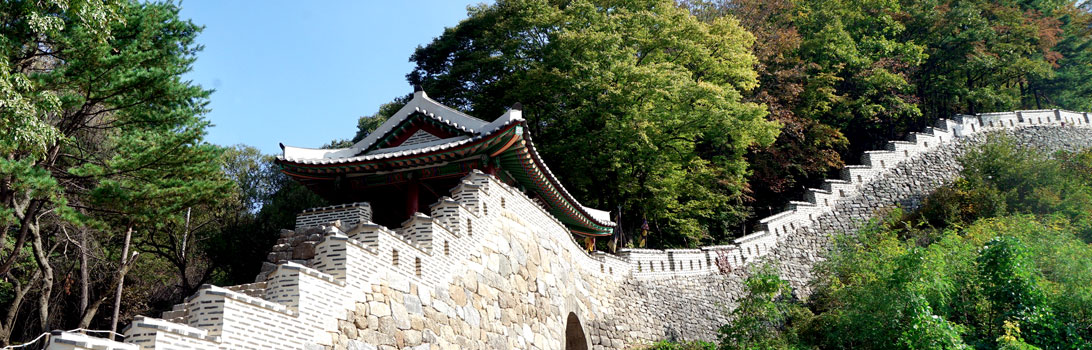
UNESCO World Heritage Namhan Fortress
- Location Sanseong-ri Namhansanseong-myeon Gwangju, Gyeonggi-do
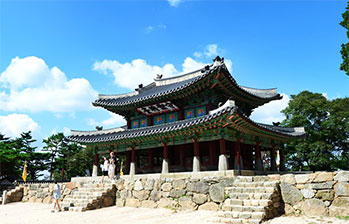
Sueojangdae
This is the only remaining building of the four Sueojangdae buildings built in 1624 (2nd year of the reign of King Injo) with Namhan Fortress. It was from here that the commanders of Sueocheong gave orders to their soldiers. It became Gyeonggi-do's Intangible Cultural Heritage No. 1 on May 4, 1972
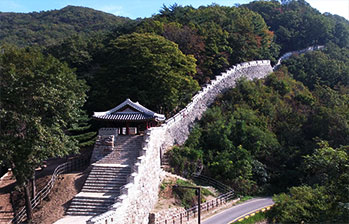
East Gate
It is not called "Joaikmun" because it is in the southeast, but it is located on the left side of Haenggung Palace and is called "Joaikmun".
The gate is 3.1 m wide and 4 m high.
East Gate is at the lowest site and does not allow entry to ox carriages as it leads to a staircase.
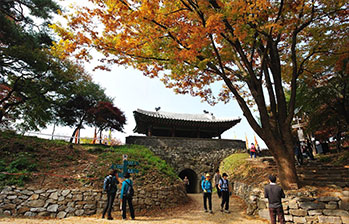
West Gate
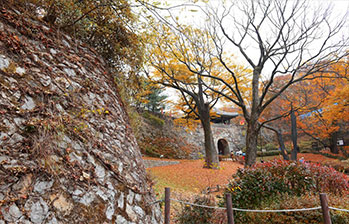
It is called “Uikmun” as it is located 450 m above sea level, at the northeastern edge of the fortress. It is where King Injo and his crown prince entered to proceed to the site of the Qing Dynasty, where he surrendered in the 15th year of his reign (1637). The gate is 1.46 m wide and 2.1 m high.
South Gate
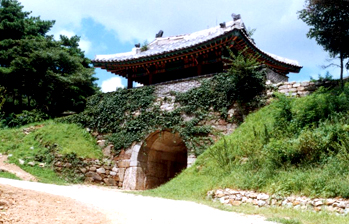
It is 370 m above sea level and is located southwest of the castle. It had existed before the fortress was constructed (2nd year of the reign of King Injo, 1624) and is also called “Jihwamun.” It is the only gate with its tablet still existing. The gate consists of Hongyemun and Munru. Hongyemun has preserved its original shape and is 4.75 m high, 3.35 m wide, and 8.6 m long. Munru has preserved its architectural style, with three front units and three side units. South Gate is the largest central gate, attracting the most tourists even today.
North Gate
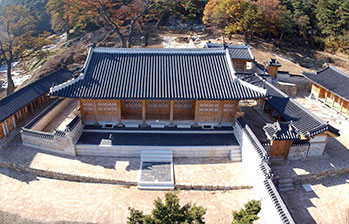
North Gate is 367 m above sea level. A new gate was added in the 2nd year of the reign of King Injo (1624). It is called “Jeonseungmun” and is 3.25 m wide and 3.65 m high.
Namhan Fortress Haenggung
Namhan Fortress Haenggung was built in the 4th year of the reign of King Injo (1626) as the evacuation site for those who evacuated Hanyang Castle and Palaces, where they waited for their allies when a war or a riot erupted. It is the one and only Haenggung with royal tombs and shrines, and represents the aesthetics of unity and harmony of nature and the man-made environment in terms of space and topography, with Hannamru, Oehaengjeon, Naehaengjeon, Joaseungdang, Ieuijeong, Jeongjeon, and Yeongnyeongjeon. It was designated as Historical Relic No. 480 on June 8, 2007.